

Five field marks to follow
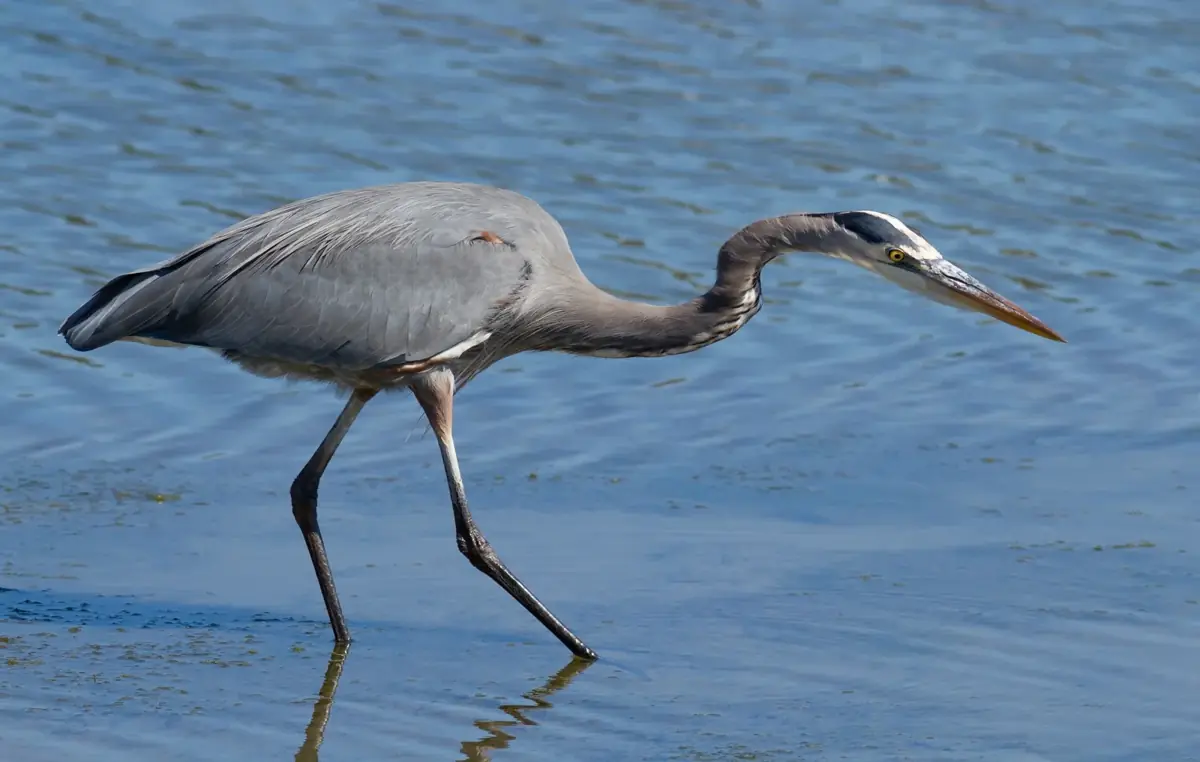

Use these labels with the photograph. A single mark can be hidden by posture or light, so build the identification from several clues.
- Bill: long, straight, and sharply pointed.
- Head stripe: a dark band extends back from above the eye.
- Neck: long and flexible, often folded into an S.
- Body: blue-gray wings and back, with warmer tones on the neck.
- Legs: long and slender; they trail beyond the tail in flight.
The pause is part of the hunt
Standing still is active work for a heron. It may wait at a shallow edge or take a careful step, then thrust its head and bill forward when prey comes within reach. Watch from a comfortable distance; there is no need to make the bird move.
Fish are common prey, but the menu also includes frogs, insects, reptiles, small mammals, and occasionally birds. Herons forage in freshwater, saltwater, and even fields. A bird away from the water is not necessarily lost.
Read the bird in flight
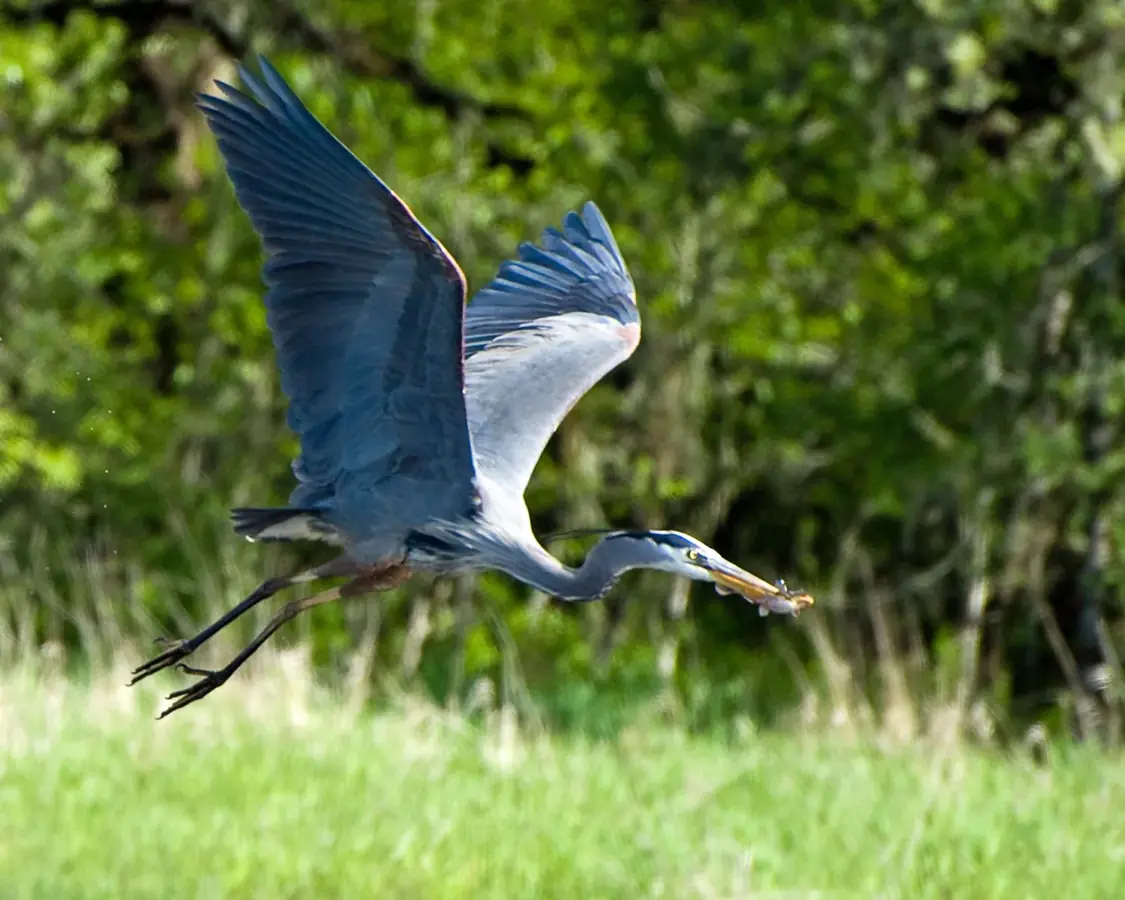
Broad wings and slow wingbeats make the flight seem unhurried. In ordinary flight, the neck folds back and the legs extend behind. Takeoff and landing can look different as the bird stretches or lowers its legs. The reference photograph shows a heron flying with its catch.
Resting and feather care
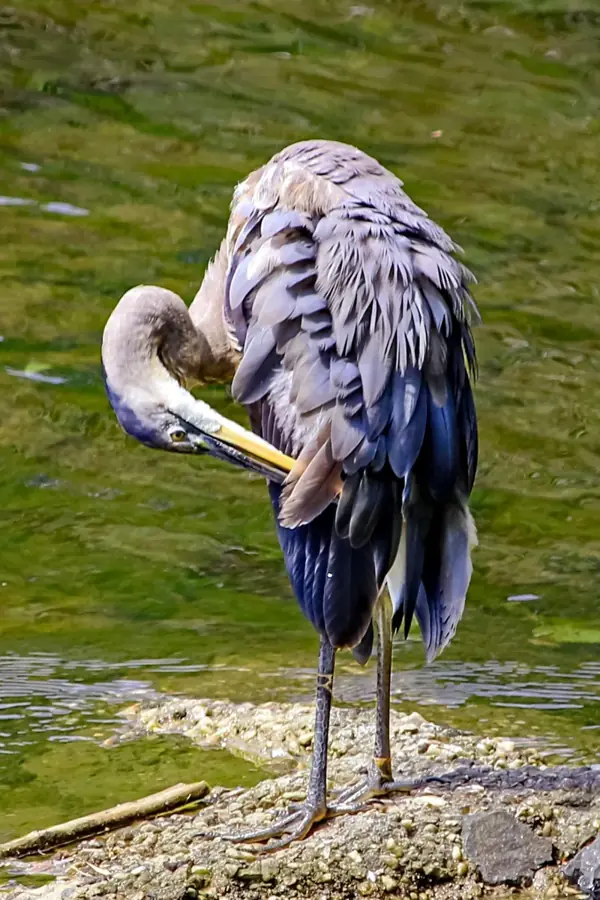

A resting heron can tuck its neck so deeply that it looks much shorter. Preening gives another view of that flexibility: the bill reaches through feathers as the neck bends around the body.
Special powder-down feathers break into a fine material that helps clean fish slime and oils from the plumage. A fringed middle claw helps the bird work through these feathers. Quiet feather care is as much a part of its day as hunting.
A year of nests, young, and movement
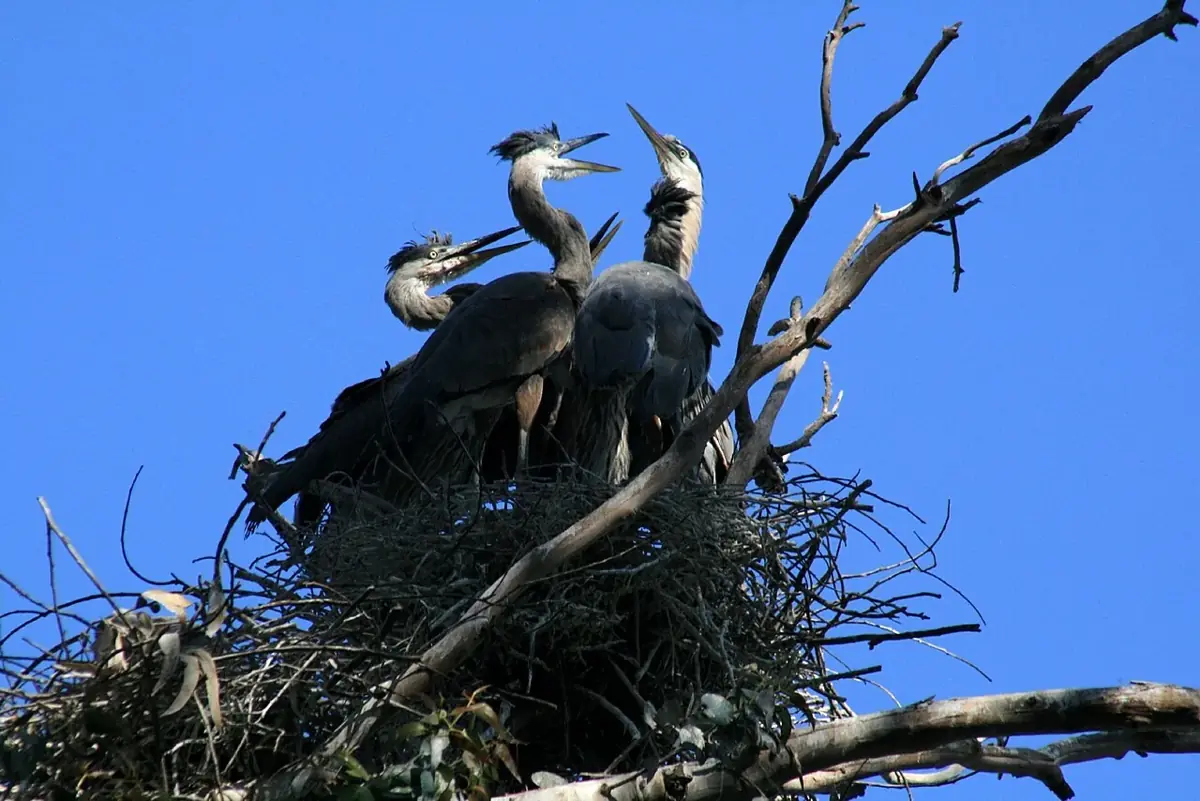

Breeding brings many otherwise solitary hunters together into colonies, often called heronries. Large stick platforms commonly sit in trees. Both adults help raise the young, bringing food back to the nest.
Eggs take roughly four weeks to hatch, and chicks spend many more weeks growing before flight. Young birds may remain around the nest after they can fly. Later in the year, dispersal and migration change where herons appear. Northern birds often move south; some remain where food and open water permit.
These are broad patterns, not a Lake James nesting calendar or a promise of a sighting. Enjoy colonies from a distance and avoid approaching nests.
A PHOTO YOU CAN READ
Five little clues.
- A long, pointed bill made for a quick strike.
- A dark stripe behind the eye on an adult's pale face.
- Blue-gray wings and back that give the bird its name.
- A long, flexible neck that extends to hunt and folds in flight.
- Long legs for moving through shallow water.
Reference photograph: Frank Schulenburg · CC BY-SA 3.0. Field numbers are an editorial overlay; photograph location is identified in its source credit.