Great Blue Heron
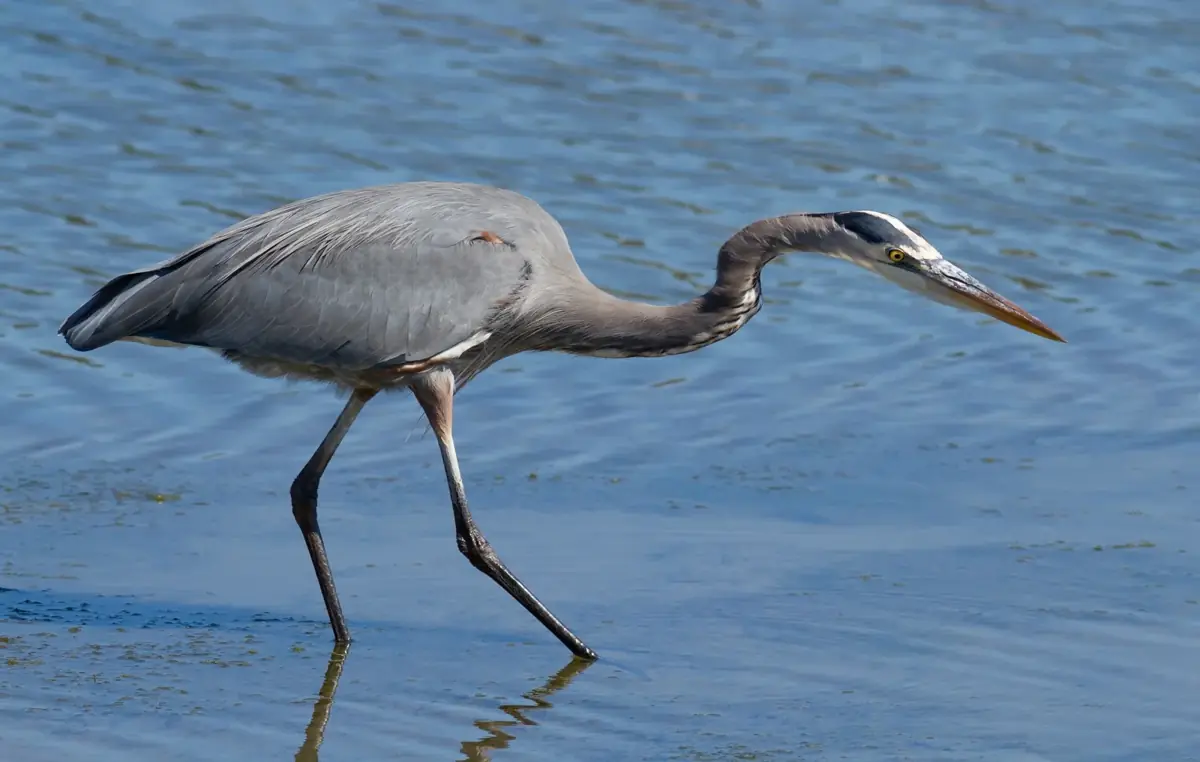

Think tall, gray-blue, and long-billed. The dark stripe over the eye and folded neck are useful clues. A hunched bird may look surprisingly compact until it reaches forward. In normal flight, look for a tucked neck and trailing legs.
Great Egret
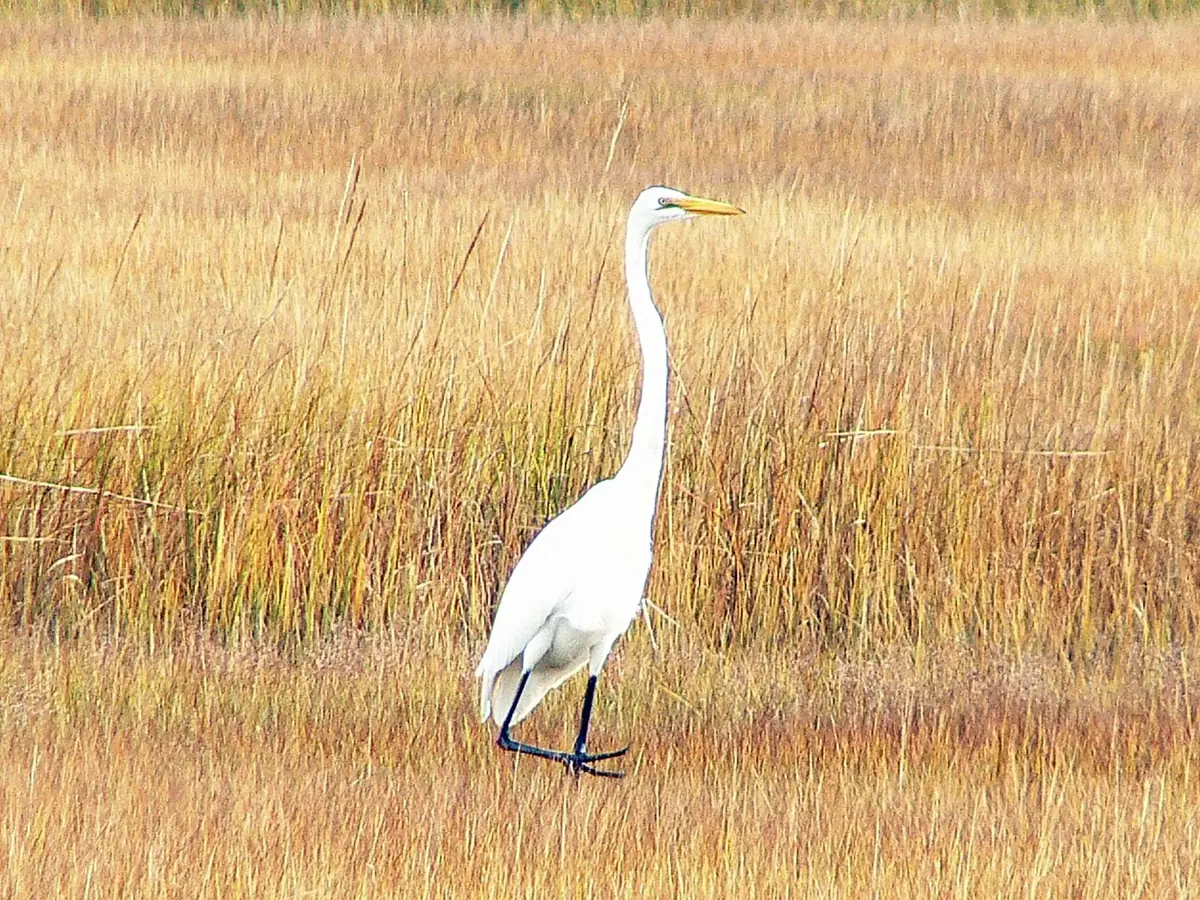
Think white feathers, a yellowish-orange bill, and black legs and feet in the familiar North American form. It is generally smaller and more slender than a Great Blue Heron. Like a heron, it normally flies with its neck pulled back.
White alone is not enough for a firm identification: other egrets exist, and southern Florida also has a white form of Great Blue Heron. Check the legs, bill, size, and location together.
Green Heron
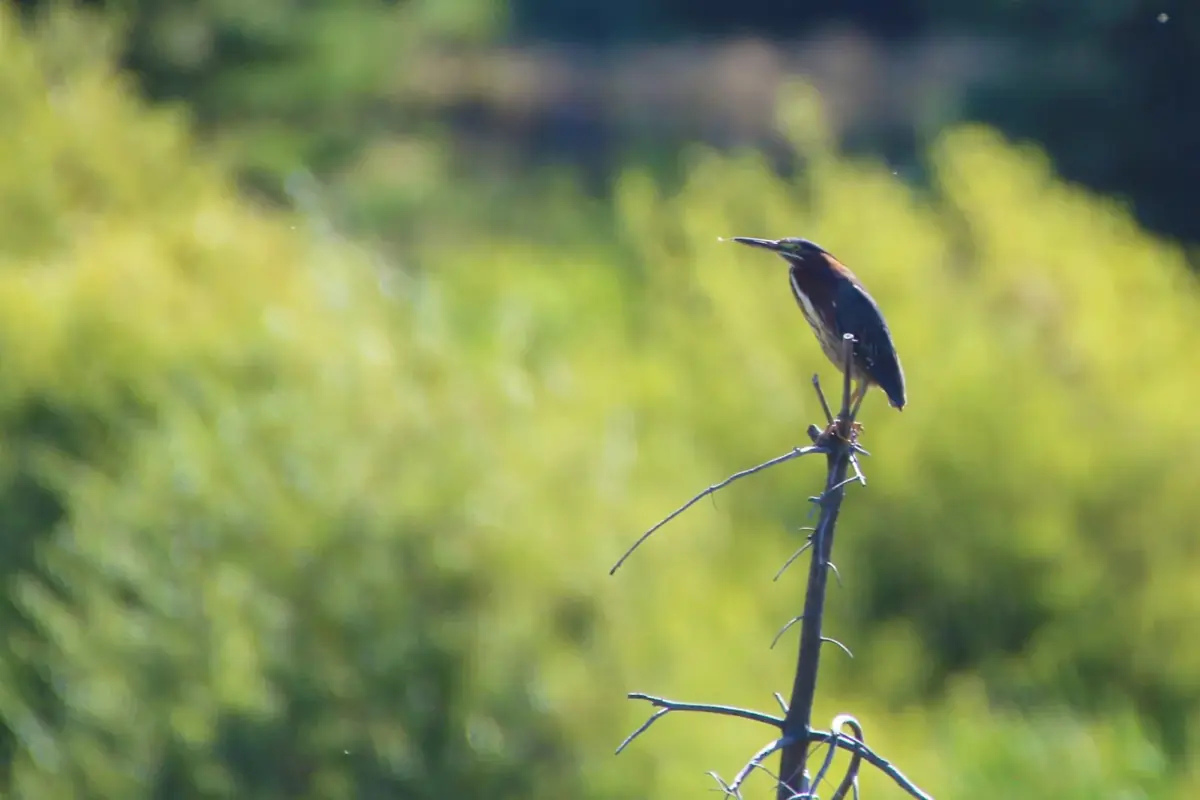
Think crow-sized and stocky, with a thick neck often tucked against the body. Adults show a chestnut neck and a dark green back in good light; at a distance they can look almost uniformly dark. Young birds are browner and more streaked.
Look along vegetation, branches, and the water’s edge. This small heron often hunts from a perch or bank rather than wading as prominently as its larger relatives.
Sandhill Crane
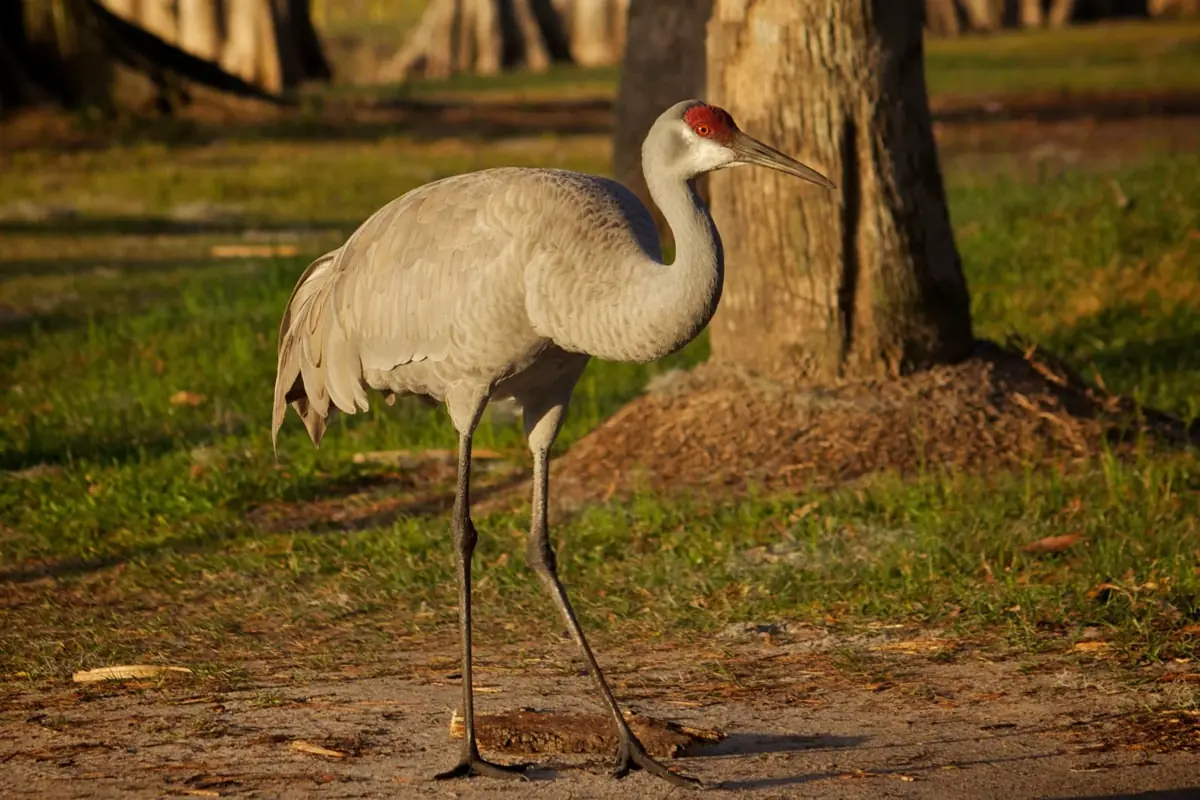
Think heavier body, gray plumage, and an adult’s red crown with a pale cheek. Loose feathers form a bustle over the short tail. Young cranes lack the adult red crown, so use shape as well as color.
The clearest flight clue is the neck: a Sandhill Crane normally holds it extended, while a Great Blue Heron folds it back. Cranes often feed in fields and open wetlands. Habitat helps, but no single setting settles the identification.
A QUICK SIDE-BY-SIDE
Notice the shape first.
| Bird | First impression | Look a little closer | In flight |
|---|---|---|---|
| Great Blue Heron | Tall and blue-gray | Long pointed bill; dark stripe behind the eye | Neck usually folded back |
| Great Egret | Tall and white | Yellow bill and dark legs | Neck usually folded back |
| Green Heron | Much smaller and compact | Dark cap, greenish back, chestnut neck | Compact shape and quick wingbeats |
| Sandhill Crane | Tall, gray, and upright | Red crown on an adult; shorter bill | Neck stretched forward |
These are identification clues, not a local sightings list. Young birds, lighting, and posture can change what you see.