

The space before the strike
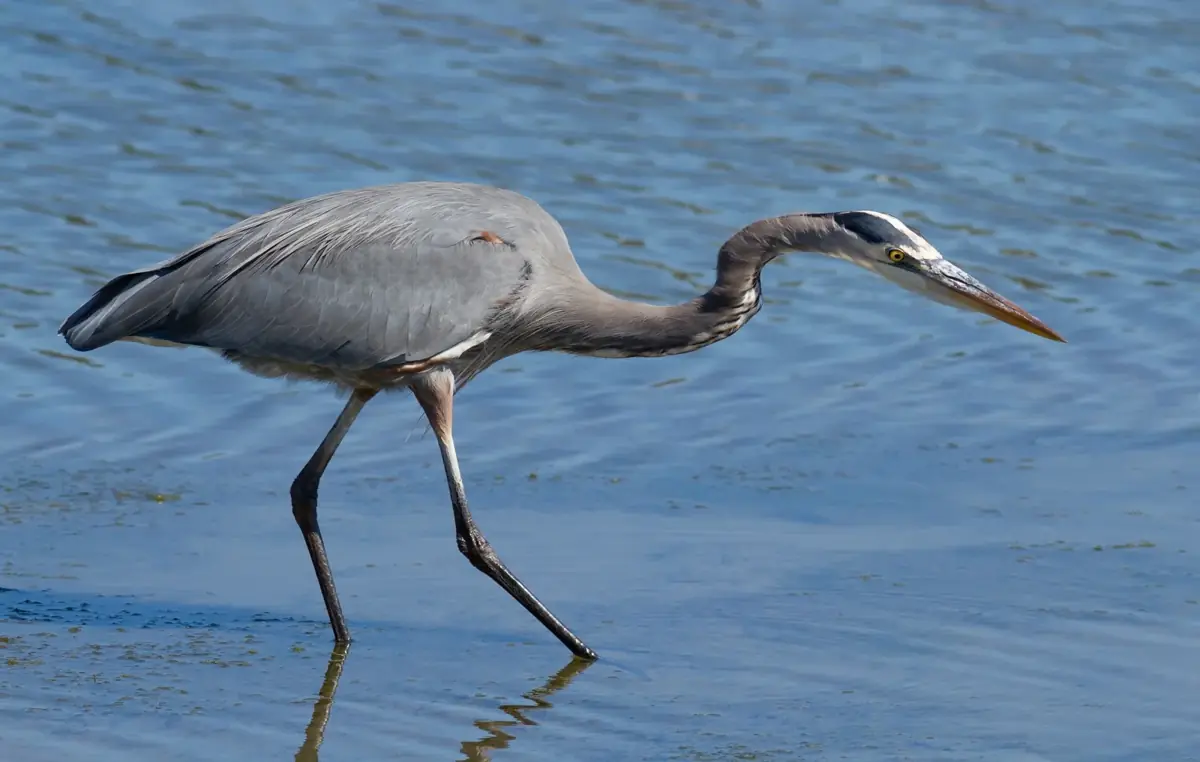

In the hunting photograph, the bill points down and forward, and the neck gathers behind it. The water is close, but there is no captured fish to announce a successful hunt. That unfinished moment is the detail to notice.
A photograph preserves posture, not an entire feeding story. We can recognize a hunting stance without inventing what happened next. On a future walk, try watching the pauses as carefully as the movements.
An unexpected curve
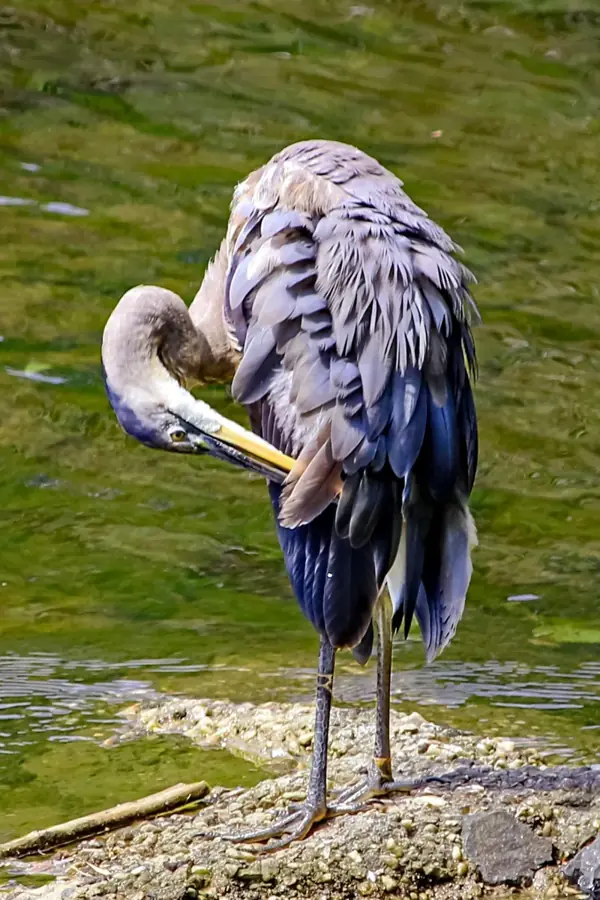

The preening bird folds its long neck back toward its own feathers. The same reach that looks direct during a hunt becomes a tight curve during grooming. Its outline is a reminder that posture can change an identification at a glance.
Follow the neck with your eyes before counting field marks. The bill, body color, and long legs still belong to the same bird, even when the familiar upright silhouette disappears.
A nest is a different shoreline story
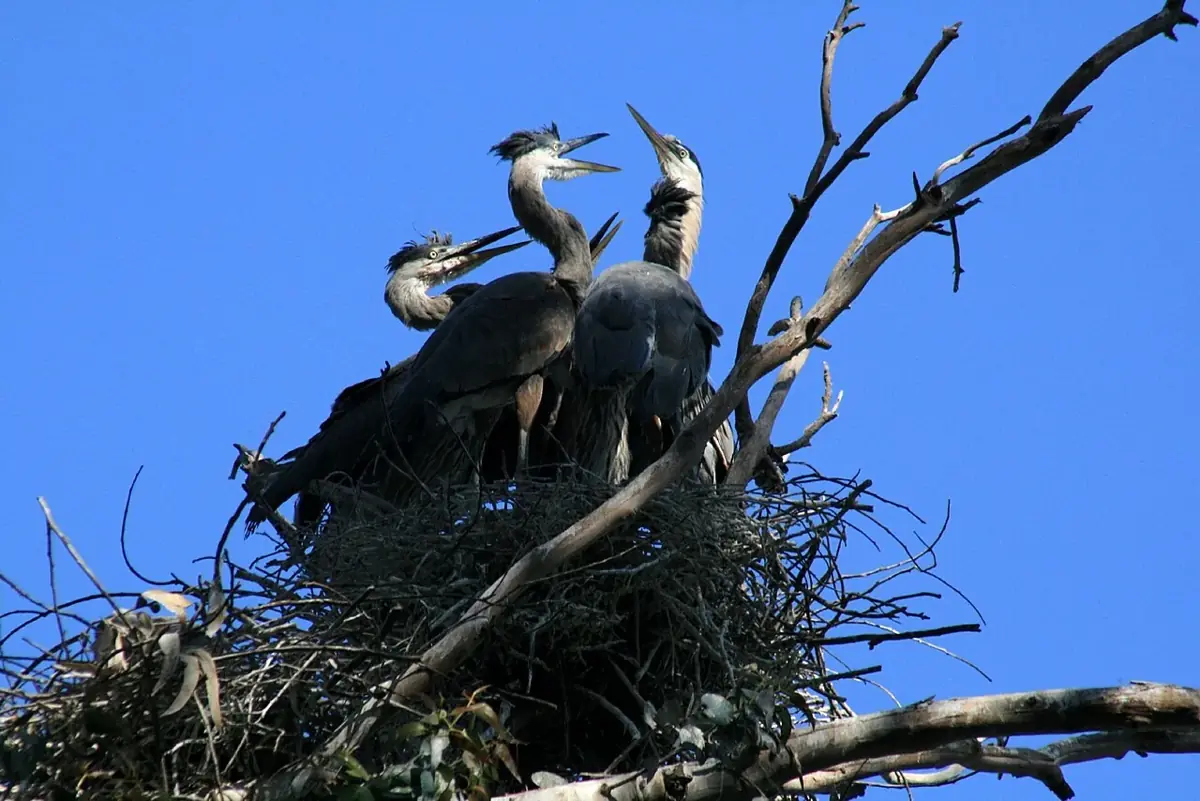

The nest photograph brings several birds into one frame. Long bills angle into the blue sky, shaggy head feathers catch the light, and a broad tangle of sticks supports the group. Their crowded outlines offer a different view from the lone hunter at the water’s edge.
This photograph cannot tell us the family’s full history. It can invite a useful change in attention: beyond the solitary hunter, there is a breeding season of shared care. Enjoy that story through photographs or distant viewing, leaving nesting birds room.